Soil decompaction and Biochar injection for tree health
Many tree health issues originate from compacted, lifeless soils rather than canopy-level defects. Machinery, footfall traffic, dense soil types and long-term neglect reduce oxygen availability and biological diversity in the root zone.
Decompaction restores oxygen and water flow, while the enriched biochar blend supports microbial recovery and nutrient uptake. This creates improved growing conditions without disturbing established root systems.
Poor tree health symptoms:
Sparse canopy
Yellowing or drooping leaves
Susceptibility to bark rot, pests and fungal infections
Water logging or rapid drying
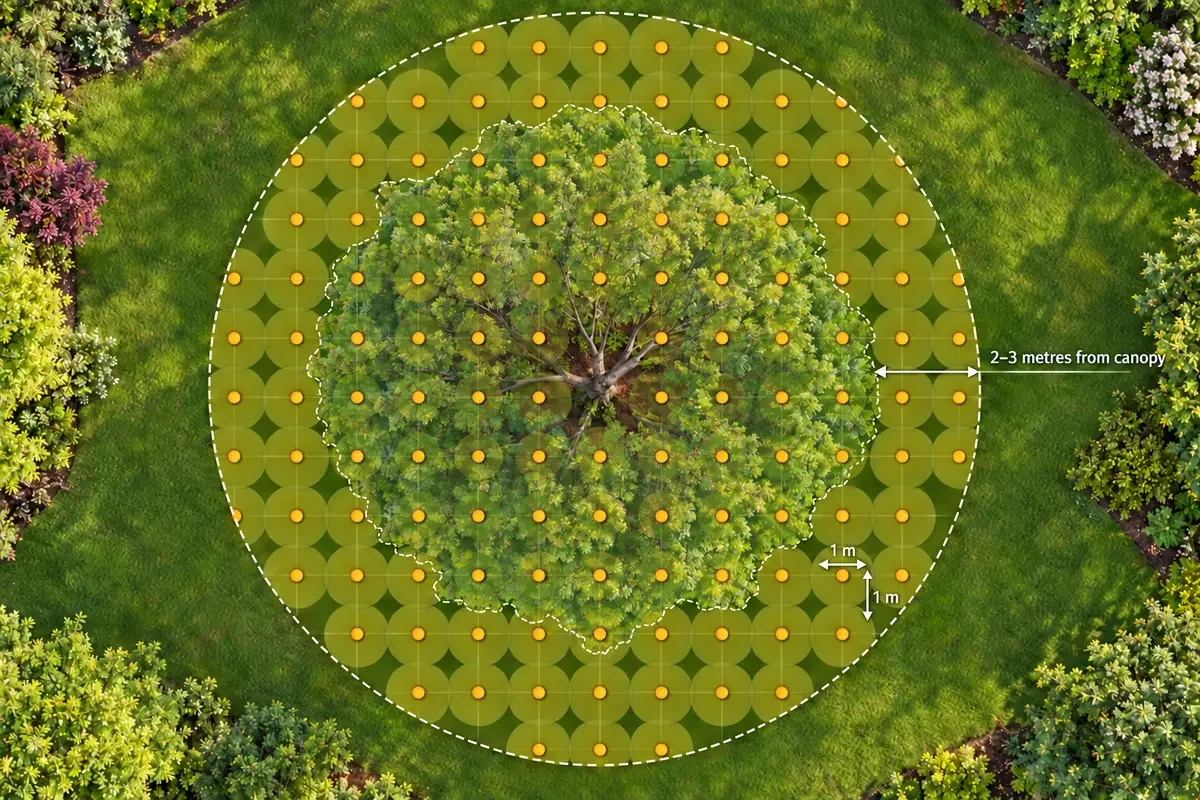
Injection zones for aeration and nutrient injection at a depth of 650mm
Long term treatment outcomes:
Improved canopy density,
Enhanced drought tolerance,
Better disease resistance and
Increased overall resilience to environmental stress.
Royal Botanical Gardens
"Trees are like people. Trees are moody, they stress but they’re beautiful when they're happy."
Tony Kirkham, head of the Arboretum at Kew Gardens told Witness History about what he learned from the ancient oak. "The golden rule that I got from the storm was that you've got to copy nature and run with her and you’ll succeed."
Fifteen million trees were felled by the Great Storm which hit the south of England in 1987, including Turner's Oak in London's Kew Gardens. However this huge tree not only survived the storm, but also changed the way that trees are cared for around the world.